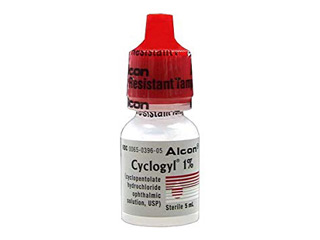
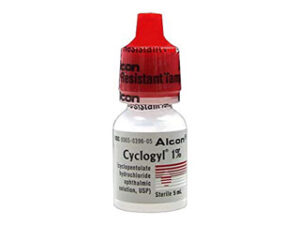
Cyclogyl (Cyclopentolate) Eye Drops – Patient Guide (Australia)
Cyclogyl contains cyclopentolate, a medicine used to temporarily widen (dilate) the pupils and to paralyse focusing for near vision. It is commonly used in eye care to help doctors examine the eye properly and may be used for specific inflammatory conditions as well.
This guide is designed to be patient-friendly and practical. Always follow the instructions provided by your eye care professional and the label on your medicine.
Quick facts
- Active ingredient: Cyclopentolate
- Medicine type: Antimuscarinic (anticholinergic) ophthalmic
- Common effect: Dilated pupils and blurred near vision (temporary)
- How it’s used: Drops into the eye
- Onset: Usually within minutes after dosing
- Duration: Often several hours for dilation/blur; sometimes longer in children or with higher doses
- Key cautions: Light sensitivity, blurred vision, possible dryness of the eye
Basic product information
Brand name: Cyclogyl
Generic name: Cyclopentolate
Dosage forms: Ophthalmic solution (eye drops)
Note: Strengths can vary by product presentation. Check your bottle/carton for the exact concentration (e.g., 0.5% or 1%).
How Cyclogyl works (mechanism of action)
Cyclopentolate is an antimuscarinic medicine. In the eye, it blocks muscarinic receptors that normally control:
- Pupil constriction: Blocking these signals allows the pupil to dilate.
- Accommodation (focus change): Blocking the ciliary muscle prevents the eye from changing focus for near objects.
What you may notice:
- Pupils become larger
- Near vision becomes blurry
- You may be more sensitive to bright light
- Vision may feel “slow” to return to normal
Pharmacokinetics (how the medicine behaves in the body)
When applied as eye drops, cyclopentolate acts primarily in the eye. Because the medicine is absorbed through the eye tissues and can enter the bloodstream, effects can occur beyond the eye in sensitive individuals (especially children).
General points:
- Absorption: Absorbs through the conjunctiva and cornea; some systemic absorption may occur.
- Distribution: After absorption, it can distribute through the bloodstream.
- Metabolism & elimination: Cyclopentolate is metabolised by the body and eliminated primarily via normal body processes.
Practical implication: Because systemic absorption is possible, children and people with certain conditions may require closer attention and punctal occlusion techniques (described later).
Typical uses and indications
Cyclogyl is used in ophthalmology for diagnostic and therapeutic reasons, most commonly to assist examinations and to control certain eye conditions where pupil dilation and cycloplegia are helpful.
Indications may include:
- Eye examinations: To dilate pupils and paralyse focusing (cycloplegia), allowing accurate assessment of refractive error (especially in children).
- Uveitis and inflammation (as advised): Sometimes used as part of management to reduce discomfort from iris spasm.
- Other ophthalmic scenarios: Where dilation and accommodation control support clinical decision-making.
Important: The exact use depends on the condition being assessed or treated. Your clinician will choose the dosing schedule and strength.
Timing: when it starts working and how long it lasts
After applying Cyclogyl:
- Onset: Usually within minutes.
- Peak effect: Often occurs over the next 30–60 minutes (variable by person).
- Duration: Typically several hours; near vision blur and light sensitivity may persist longer in some people.
Plan for reduced vision: If you are having an eye exam, arrange transport and avoid driving until your vision has fully cleared.
Food interactions
Because Cyclogyl is used as eye drops and acts locally, food interactions are not typically expected. There are no well-known direct interactions between cyclopentolate eye drops and food.
Still: If you take medicines that affect your nervous system (or if you have complex medical conditions), discuss them with your pharmacist or eye care professional.
Alcohol and medicine interactions
Alcohol
There is no specific alcohol-food interaction commonly highlighted for Cyclogyl eye drops, but alcohol can worsen blurred vision and dizziness caused by other factors.
- Consider avoiding alcohol on the day of treatment or for as long as your vision remains affected.
- Do not drive or operate machinery if your vision is impaired.
Medicine interactions
Cyclopentolate has antimuscarinic effects. Certain medicines with anticholinergic activity may increase side effects. Examples of medicine classes that may be relevant include:
- Other anticholinergic/antimuscarinic medicines (some antihistamines, bladder medicines, or certain anti-nausea medicines)
- Tricyclic antidepressants or other drugs with anticholinergic properties
- Some medicines for motion sickness
Systemic risk is higher in children and with accidental overuse. If you’re unsure, ask your pharmacist or clinician to check possible interactions with your current medicines.
Tell your clinician if you use: glaucoma medications, medicines for urinary symptoms, psychiatric medications, or any other regular eye or systemic medicines.
Dosing guidance (typical regimens)
Always use the dose recommended for you by your eye care professional. Dosing can vary depending on age, indication, eye condition, and exam technique.
Common dosing patterns in eye care settings may include:
- For cycloplegic refraction: Often multiple drops are used with a short interval between doses.
- For exam preparation: One or more drops may be administered prior to assessment.
- For inflammatory conditions: A different schedule may be chosen.
Typical approach (example):
- A single drop is placed in the affected eye(s).
- If more drops are required, they are usually given at set time intervals (as directed).
- Do not exceed the recommended number of drops.
Missed dose: If you were given a schedule and miss a dose, contact your clinician for advice. Do not double up.
Overuse caution: Using extra drops increases the risk of systemic side effects and severe eye symptoms.
How to use Cyclogyl safely (practical tips)
Step-by-step application
- Wash your hands before and after use.
- Check the bottle tip is clean and not damaged.
- Gently pull down the lower eyelid to form a small pocket.
- Place one drop into the eye without touching the eye or eyelids with the bottle tip.
- Release the eyelid and close your eye gently.
- Keep eyes closed for about 1–2 minutes after dosing.
- Replace cap tightly.
Punctal occlusion (helps reduce systemic absorption)
To limit drainage of the drop into the nose and to reduce systemic absorption, you can press gently at the inner corner of the eye (near the nose) for 1–2 minutes after instilling the drop. This is especially relevant for children and anyone prone to side effects.
Contact lenses
- If you wear contact lenses, remove them before instilling eye drops.
- Ask your clinician when it’s safe to reinsert lenses. Dilation/cycloplegia may make fitting and vision assessment less reliable until your exam is complete.
Protecting your vision
- Wear sunglasses outdoors; pupils may remain dilated.
- Be cautious with screen brightness and indoor lighting.
- Avoid reading for long periods if near vision is blurred.
Safety profile: side effects and when to seek help
Most people tolerate Cyclogyl eye drops well. However, as with all medicines, side effects can occur.
Common eye-related effects
- Light sensitivity due to pupil dilation
- Blurred near vision (cycloplegia)
- Dryness or mild irritation
- Redness or a mild stinging sensation
- Temporary visual changes
Possible systemic effects (more relevant in children)
Because some of the medicine can be absorbed, watch for symptoms such as:
- Dry mouth
- Flushness or unusual warmth
- Fast heartbeat
- Drowsiness or unusual behaviour
- Agitation or confusion
- Fever
Seek urgent medical help if a child (or any person) develops concerning symptoms such as severe confusion, breathing difficulty, persistent fever, or pronounced behavioural changes.
Serious warning signs
In rare cases, people may experience complications related to pupil dilation, particularly in those at risk for narrow-angle glaucoma.
- Severe eye pain
- Severe headache
- Nausea/vomiting
- Significant worsening of vision
If you experience any of these, contact emergency services or seek immediate medical care.
Who should take extra care
Cyclogyl may not be suitable for everyone. Extra caution is needed in people with:
- Known or suspected narrow-angle glaucoma (due to pupil dilation risk)
- Previous adverse reactions to antimuscarinic medicines
- Young children (systemic absorption risk is higher)
- Neurologic or cardiovascular conditions where anticholinergic effects may be more problematic
If you have any of these, discuss risk factors with your pharmacist or eye care professional before use.
Alternative options
Depending on why Cyclogyl is being used (diagnosis vs treatment), your clinician may consider alternatives such as other cycloplegic or pupil-dilating agents.
Common alternatives used in eye care
- Atropine (longer acting cycloplegic)
- Homatropine (cycloplegic)
- Tropicamide (often used for shorter dilation)
- Other dilating/cycloplegic combinations depending on the clinical goal
Your eye specialist will choose the most appropriate option for the situation, balancing effectiveness, onset, and duration.
Market and legal context for Australia
In Australia, availability and supply of medicines is regulated. Eye drops used for examination and eye conditions may be supplied under different categories depending on the product, strength, and intended use.
- Authorised supply: Online pharmacies must comply with Australian regulations for dispensing and supply.
- Product matching: Ensure you purchase the correct brand/generic and concentration.
- Clinical suitability: Your clinician may adjust the strength or dosing plan based on age and medical history.
Recent guidance: Australian health authorities periodically update advice regarding safe medicine use, the management of eye conditions, and regulations for online pharmacy dispensing. For the latest information relevant to your situation, consult your pharmacist or healthcare provider.
Delivery and availability (what to expect)
Availability of Cyclogyl can vary depending on manufacturer supply and local distribution. When ordering online, most Australian pharmacies provide:
- Standard delivery and sometimes express delivery depending on your location
- Temperature and handling considerations as directed on the carton (most eye drops are stable at typical room temperatures unless stated otherwise)
- Tracking for dispatch notifications (where available)
Check before you order: confirm the strength, pack size, and expiry date, and whether the product is suitable for your intended use.
Patient FAQs
1) How will my vision feel after using Cyclogyl?
You will likely experience blurred near vision and increased light sensitivity. These effects are temporary but can last for several hours. Bring sunglasses and avoid driving until your vision returns to normal.
2) Can I drive after Cyclogyl?
Do not drive while your pupils are dilated and near vision is blurred. Wait until your vision clearly improves. If you are unsure, ask your eye care professional or pharmacist.
3) What should I do if the drop runs down my cheek?
This can happen. Try to apply gently, keep your eyes closed for 1–2 minutes, and consider punctal occlusion (press the inner corner near the nose) to reduce drainage.
4) Is Cyclogyl safe for children?
Cyclogyl is used in children in eye care, but dosing and safety require careful attention. Children may be more likely to develop systemic effects. Use exactly as directed and use punctal occlusion when advised.
5) What happens if I accidentally use extra drops?
Using more than instructed increases side-effect risk. Contact a pharmacist or healthcare provider for advice, especially for children. Seek urgent medical care if severe symptoms occur (e.g., confusion, fever, fast heartbeat, or breathing difficulties).
6) Can I use Cyclogyl with other eye drops?
Often yes, but you should separate different eye drops by a time interval if instructed. Some drops can interact with comfort and absorption. Ask your pharmacist or clinician for a personalised schedule.
7) Will Cyclogyl affect my eyes permanently?
Cyclogyl’s effects on pupil dilation and focusing are typically temporary. Most people return to normal vision as the medicine wears off.
8) Can I wear contact lenses?
Generally, remove contact lenses before instilling eye drops. Your clinician or pharmacist will advise when you can restart contact lens use.
9) Are there any food or alcohol restrictions?
No specific food restrictions are usually required. Alcohol is best avoided on the day of treatment if your vision is blurred, as it may increase the risk of unsafe activities or dizziness.
10) When should I seek medical help?
Seek urgent help if you develop severe eye pain, severe headache, nausea/vomiting, rapidly worsening vision, or concerning systemic symptoms (especially in children).
Summary
Cyclogyl (cyclopentolate) is an eye drop used to dilate the pupils and temporarily paralyse focusing, supporting eye examinations and certain eye conditions. Its effects often begin within minutes and typically last for several hours, with temporary light sensitivity and blurred near vision. While generally well tolerated, it requires careful use—particularly in children—and you should seek urgent assistance for severe symptoms.
If you have questions about how to use Cyclogyl, whether it is appropriate for your eye health, or how long your vision effects may last, speak with a pharmacist or your eye care professional.